Bose Soundwear Companion
2015-2016
Based on a wearable acoustic concept from within Research, Soundwear Companion spent several years in prototyping and user testing before I was assigned to the development project. Through tight integration with the mechanical and acoustics teams, we developed a unique solution that explored wearable technology through soft forms and materials. With tailored covers to customize and blend in with clothing, the core product aimed for an elegant expression of the underlying technology while remaining organic and approachable.
The inital concept for an out-loud wearable came from Research, where a series of works-like prototypes had been user-tested in the wild, and an "aspirational industrial design" was provided by the ADID team.

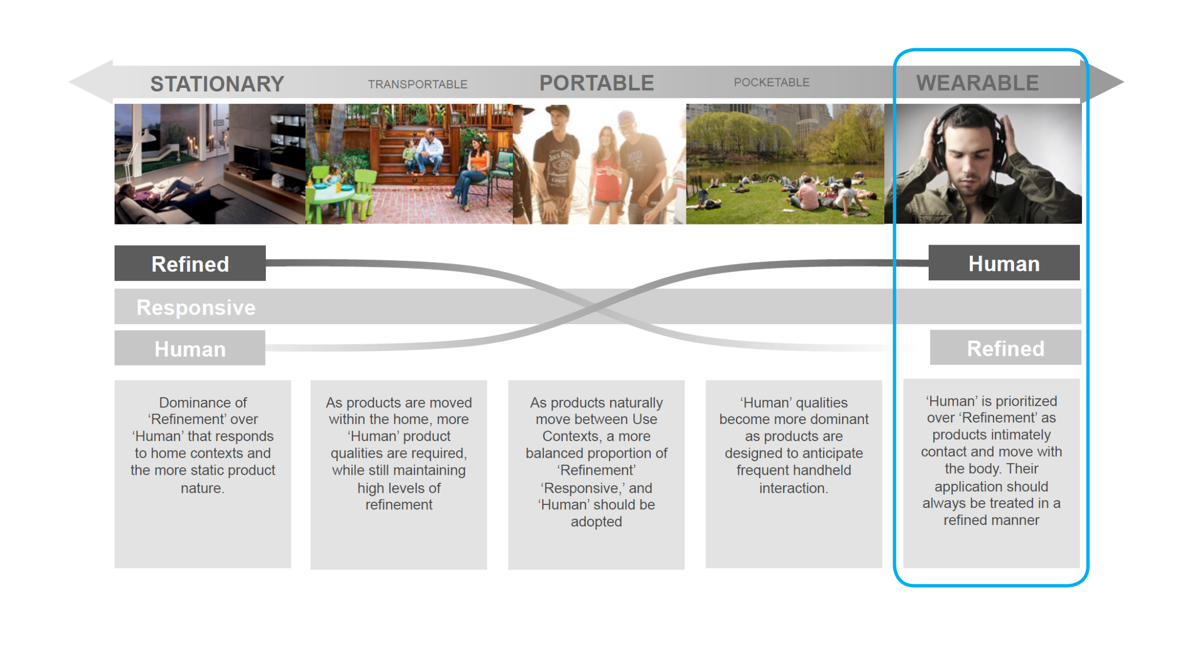
The Bose Design Center had recently completed product design language guidelines that sought to systemize form, details, and CMF across the range of products. I was able to apply some of these principles for the first time to this wearable.

Outside consultants provided an initial range of industrial design concepts.
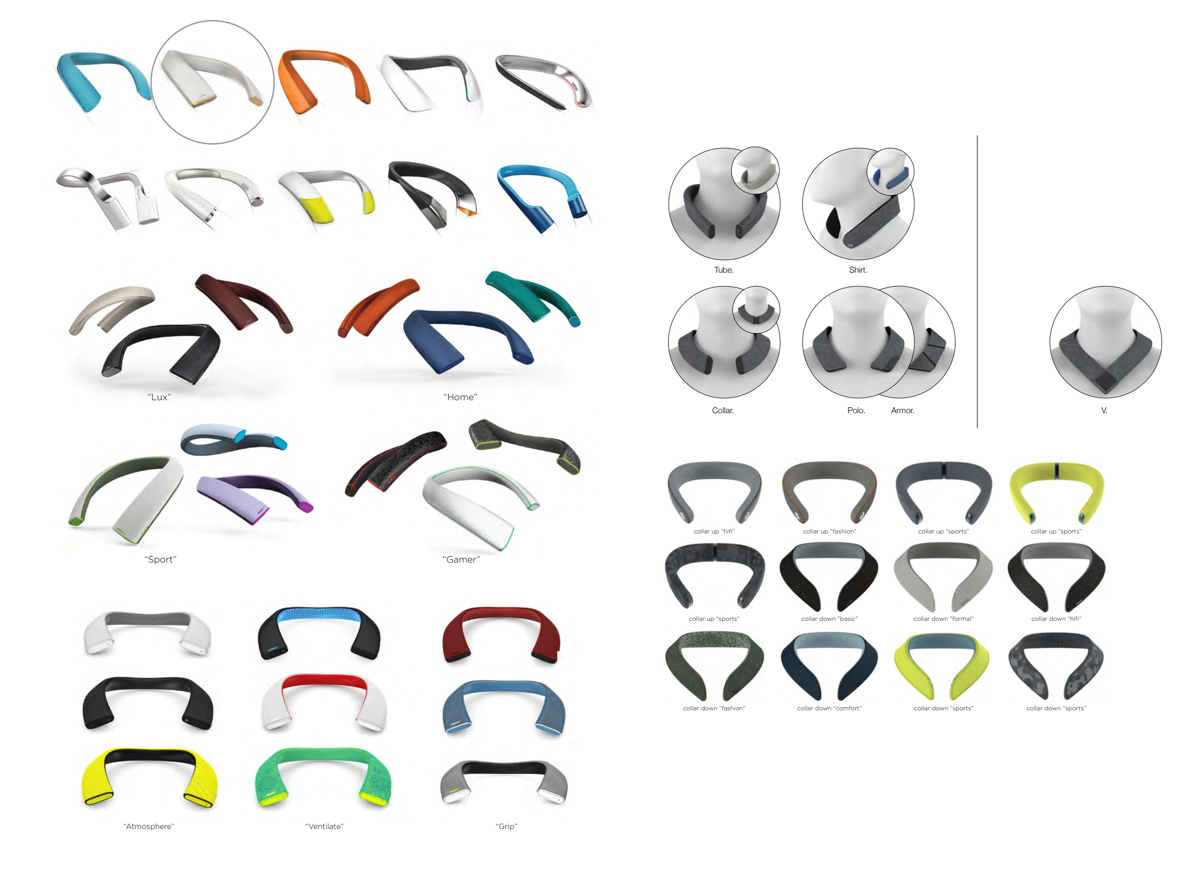
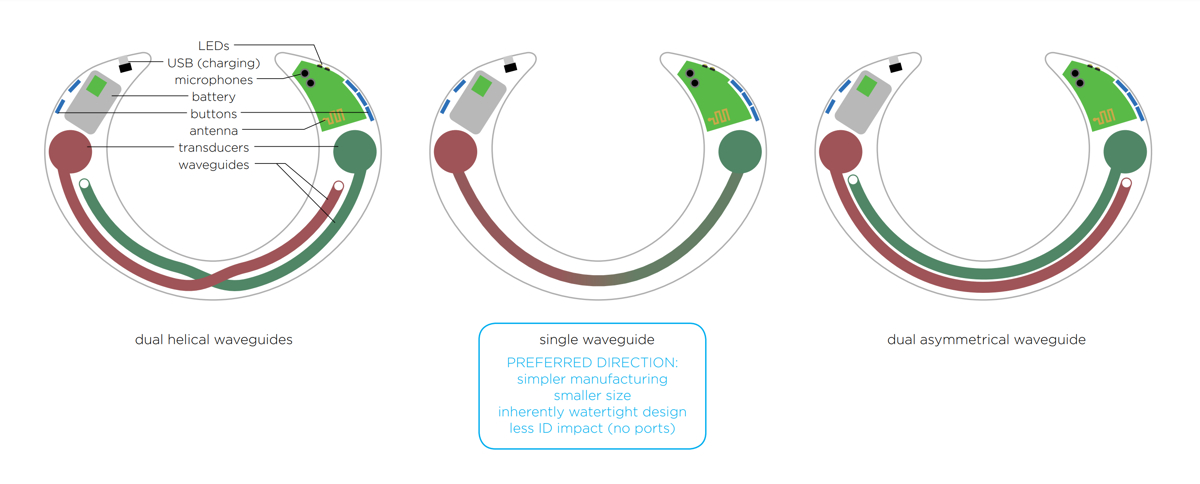
I worked closely with the mechanical, electrical, acoustic, and system engineers to consider variations in the internal architecture.
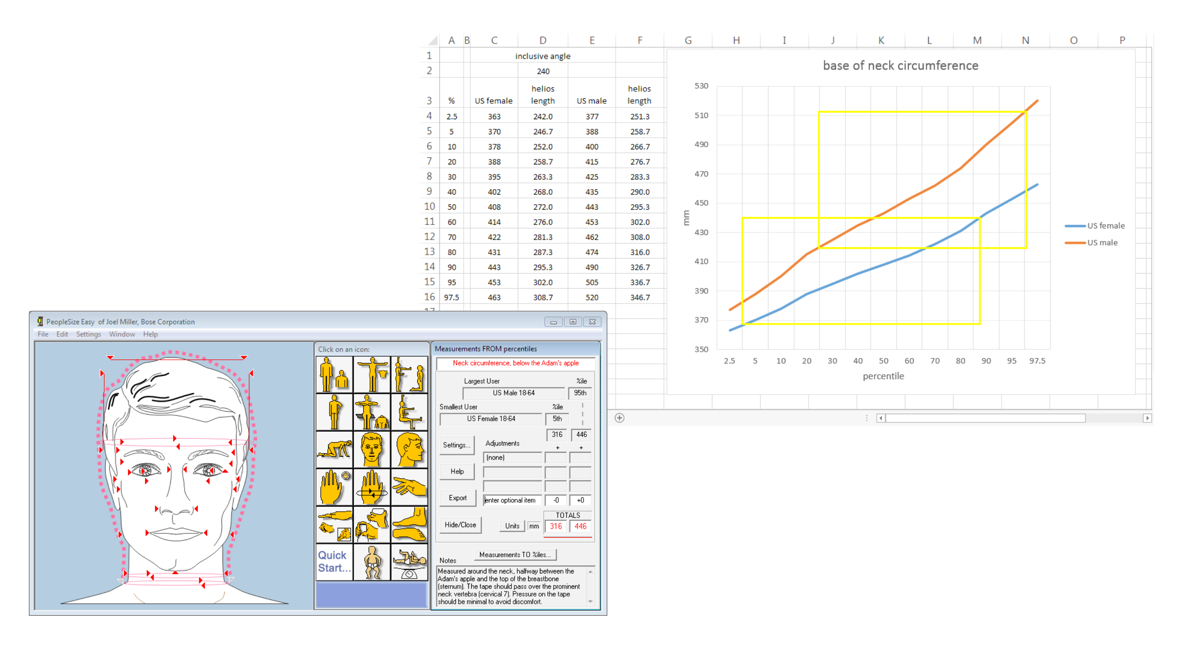
I referenced anthropometric data for key measurements on a wide range of adults, and determined an acceptable "one size fits all".
With a 50th percentile human as a base, I built the initial CAD model in NX and began making 3D printed mock ups in an iterative process.
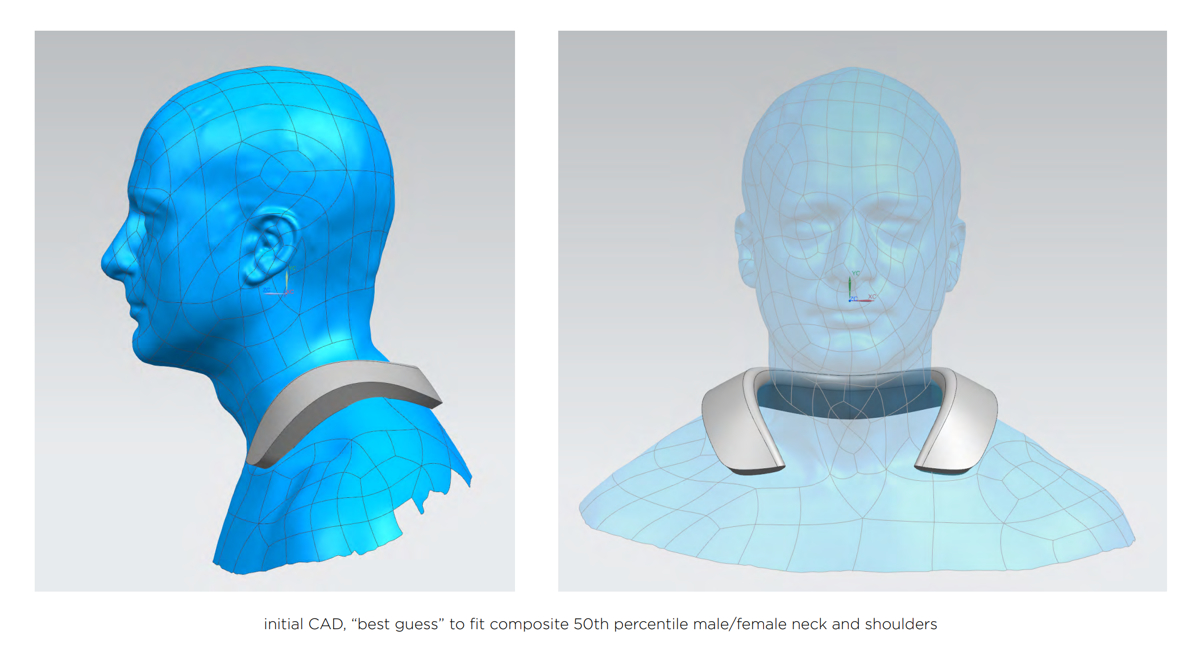
As we closed in on the general shape and size, I began refining the form.

Through tight collaboration with the mechanical team and program manager, we developed a flexible/rigid concept with an unbroken, organic form.
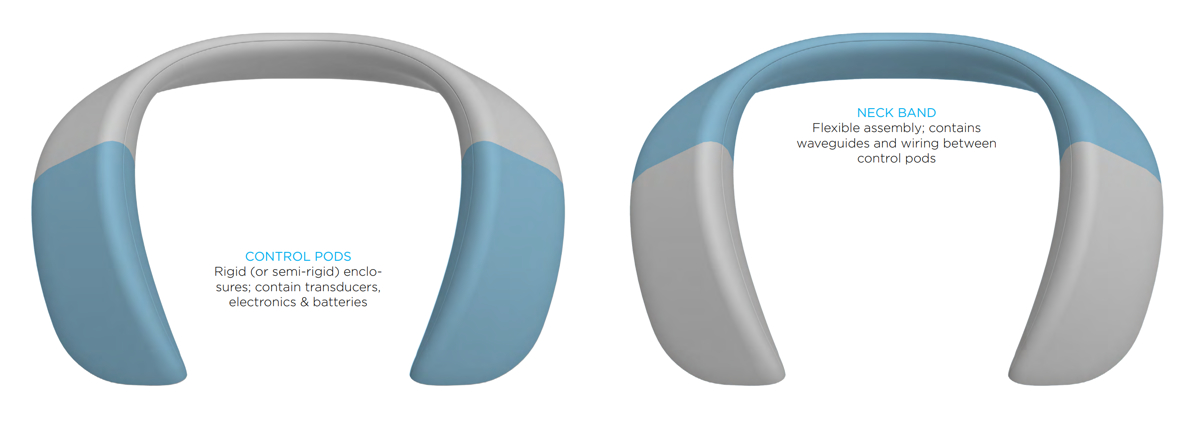
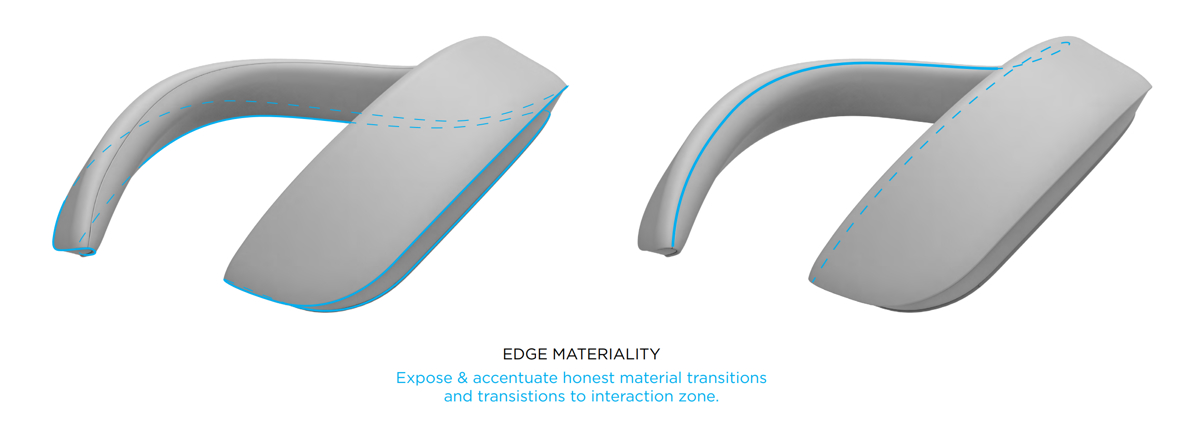
Referencing the design guidelines, I delineated between the "contact zone" and "interaction zone" with deliberate material transitions.
The initial industrial design proposal presented early in the program featured replaceable covers with an exposed silicone face.
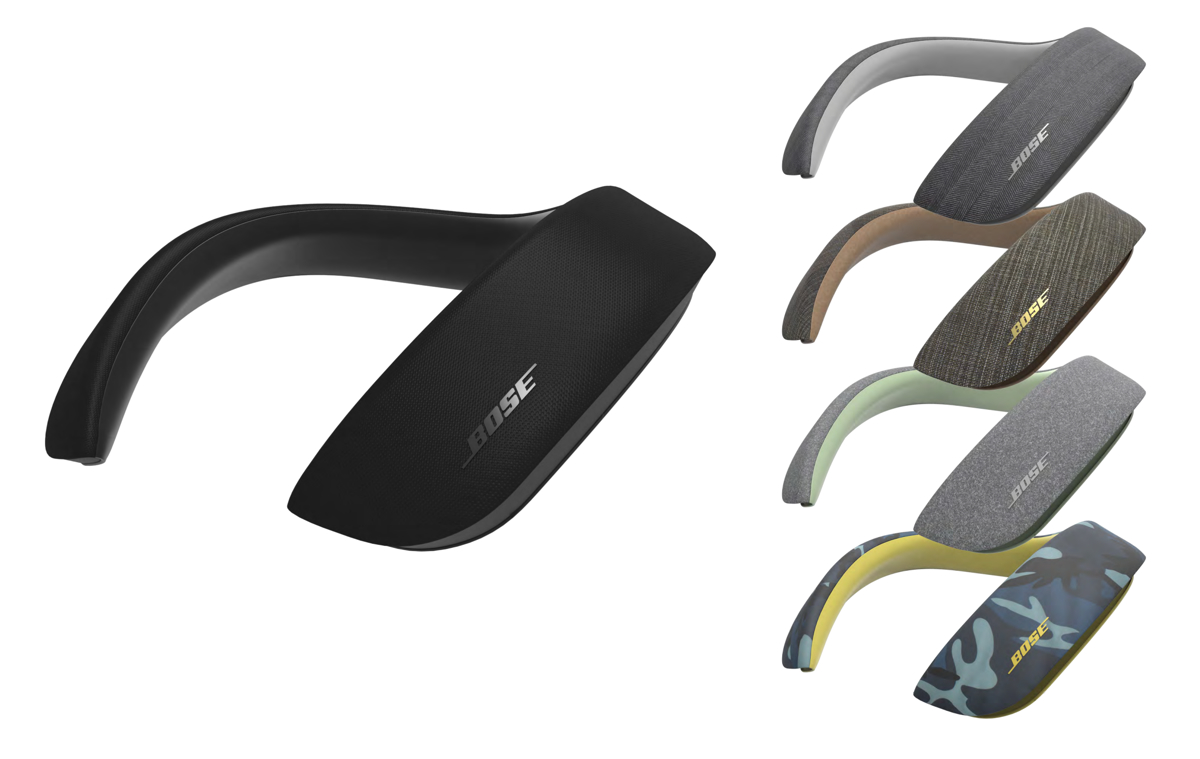
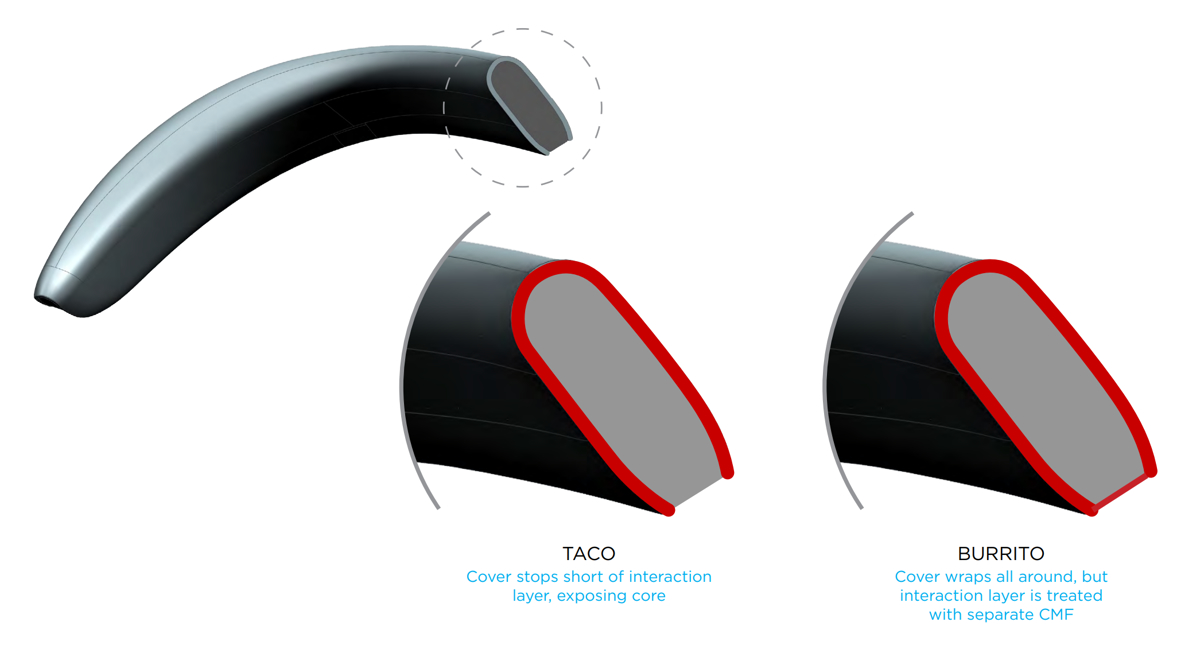
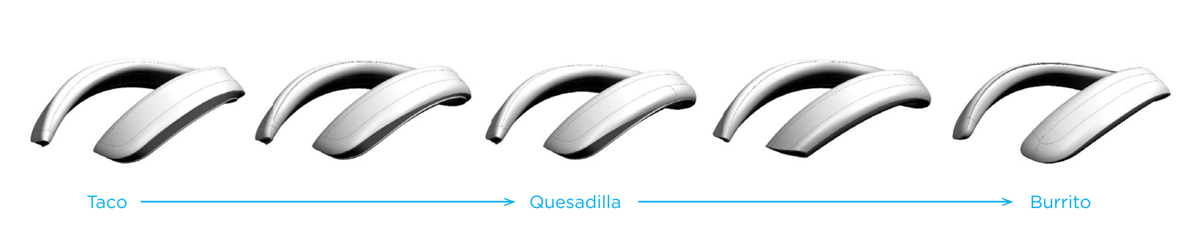
As we engaged with an outside consultant in soft-sided product development, we learned that the "taco" architecture would be difficult to execute in production. Working with the outside experts, I proposed a range of alternative concepts.
With the cover architecture maturing, I began exploring user interface concepts.
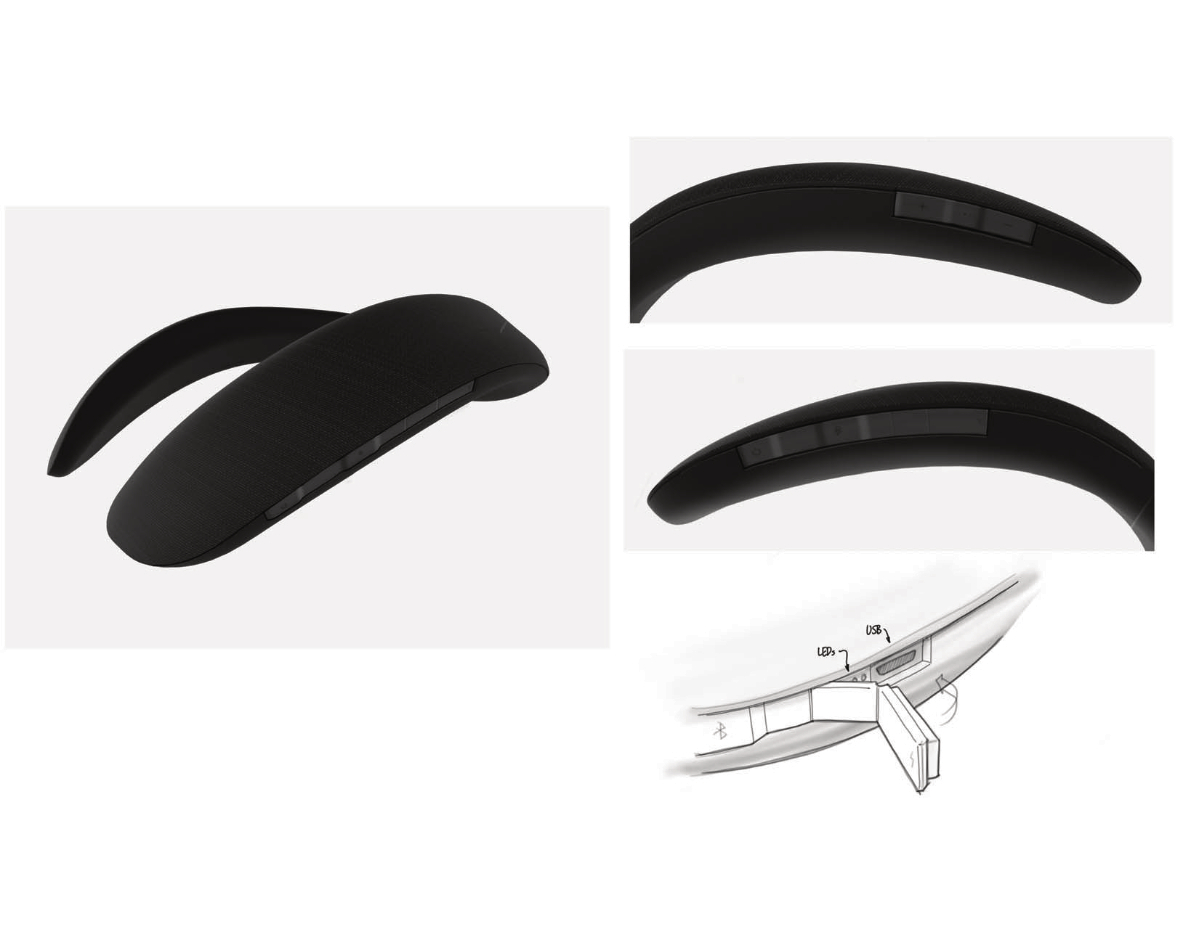


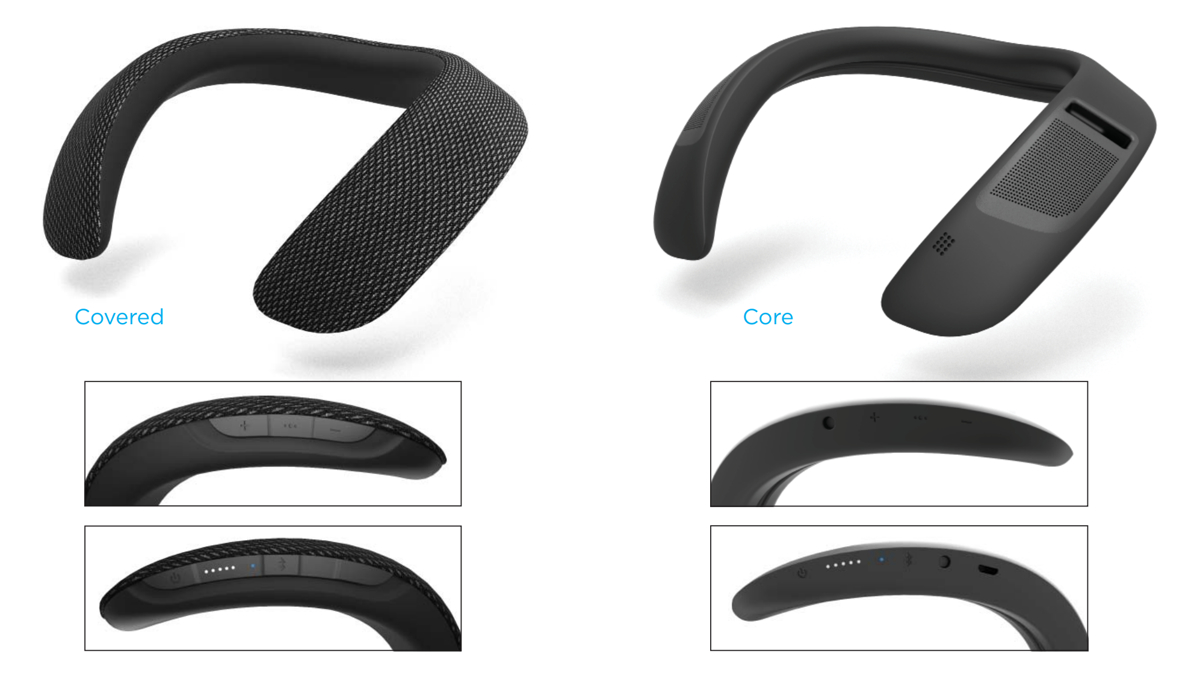
I collaborated with marketing and program management to work through some adjustments to the product vision with regard to the covers, and how integral they would be. It was decided that the cover would be included but not required, and the core product would be designed to stand alone or work with the cover on.

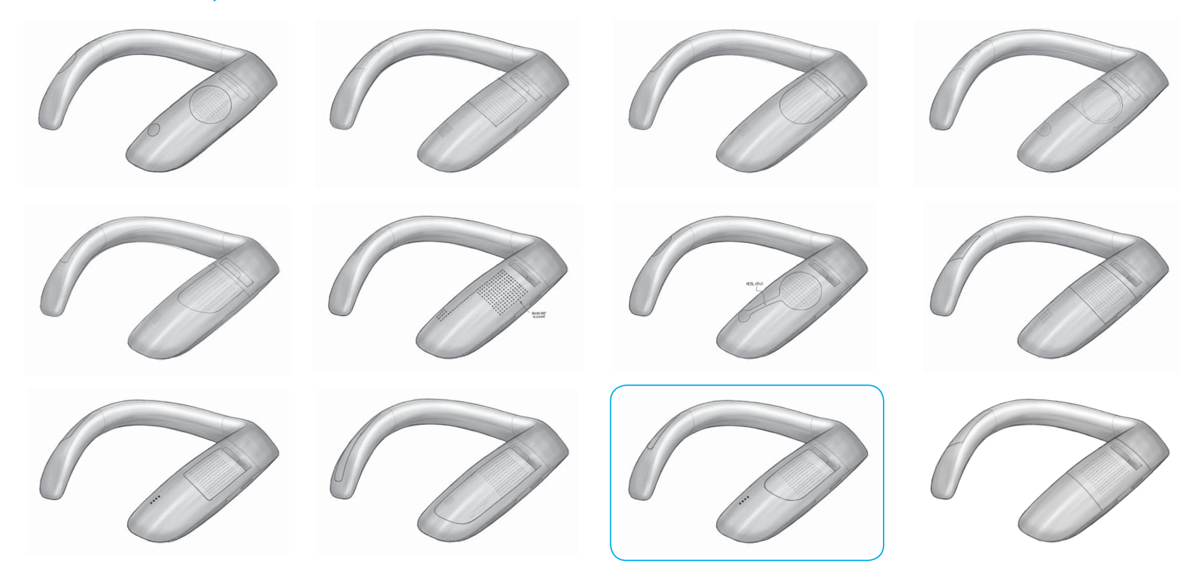
I explored a range of sketch concepts for the core product, and refined the form and details.

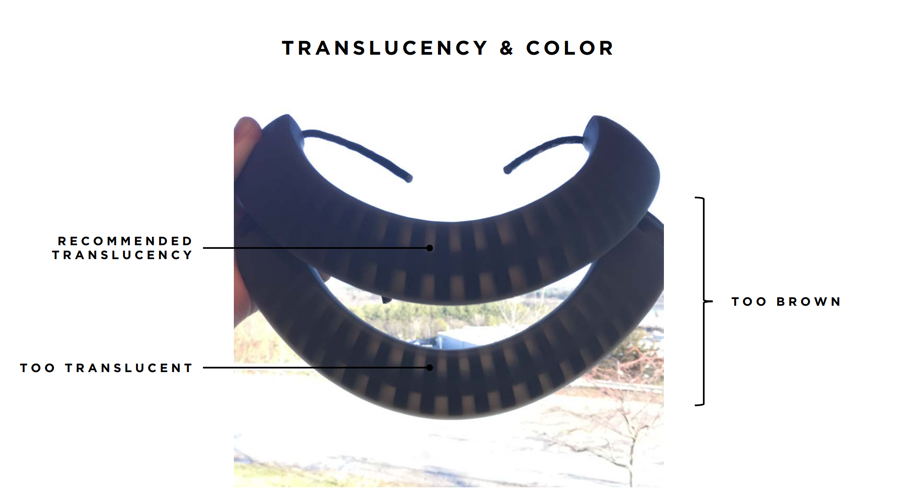
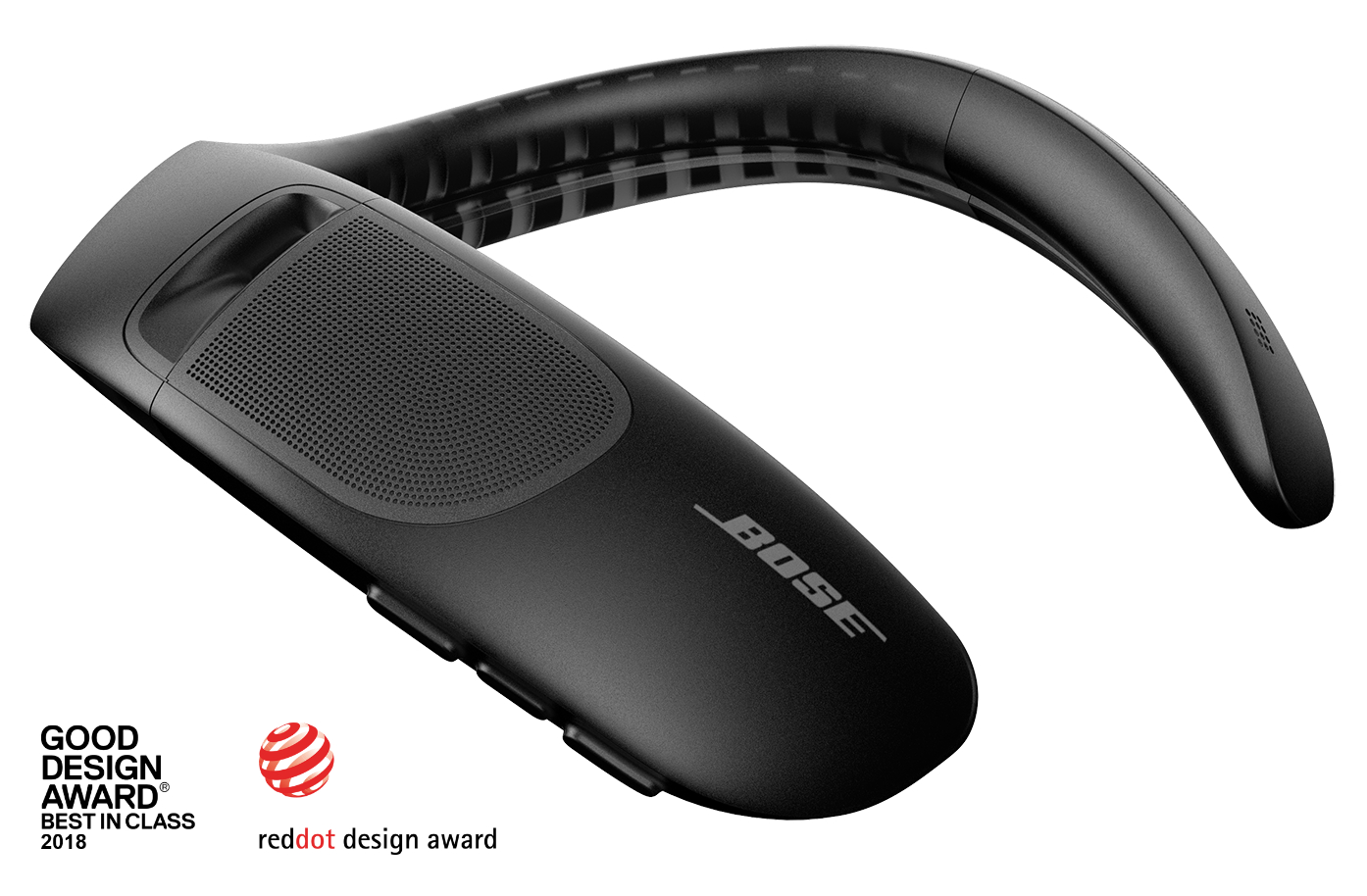
The final proposal featured a translucent silicone neckband, exposing its vertebrae-like structure. Molded-in controls and PVD-coated stainless steel grilles were meant as an elegant expression of the technology within.

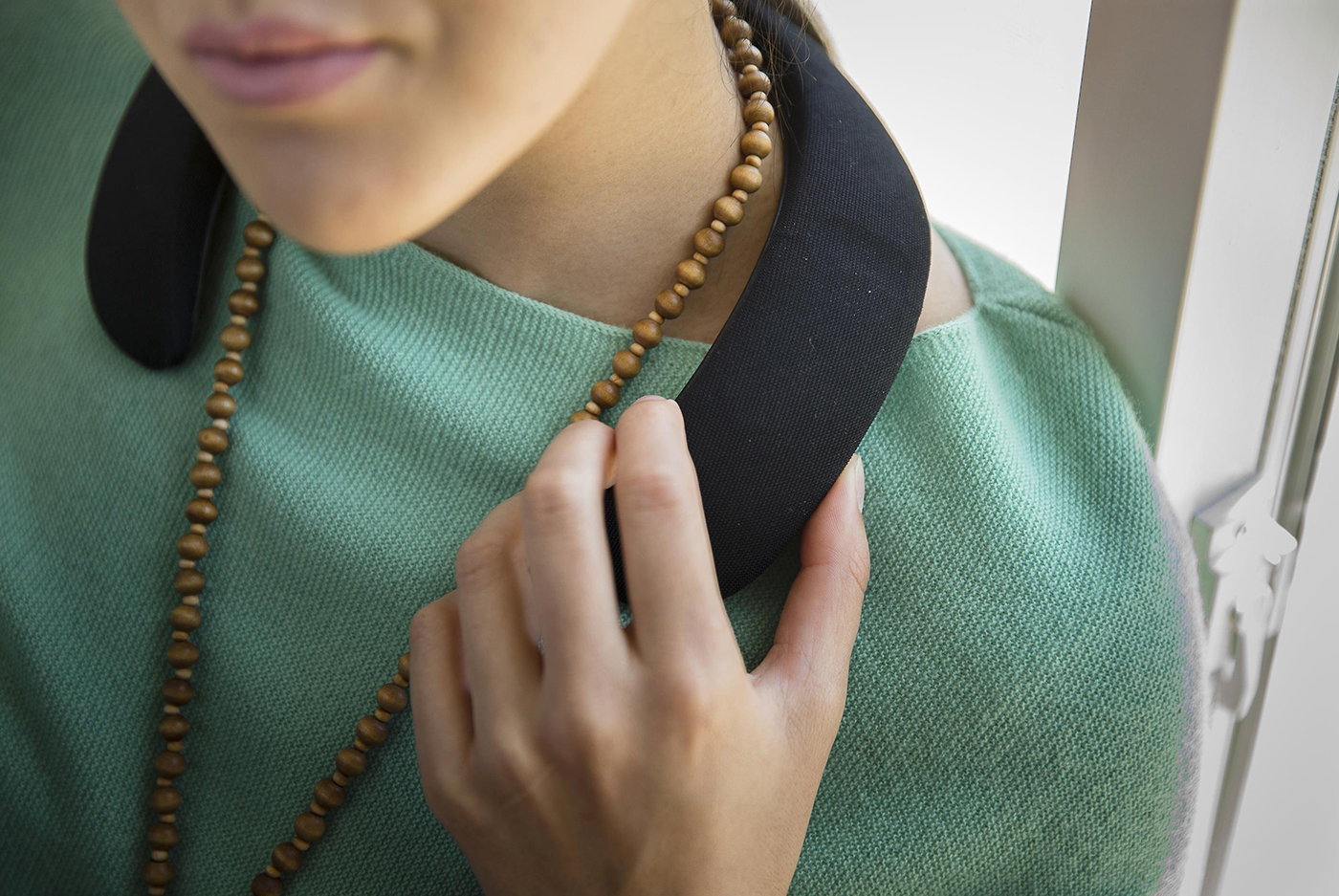
The covers were engineered to zip onto the core product, with a leather-like underside and highly stretchable top for a tailored fit that would not wrinkle as the product flexed.
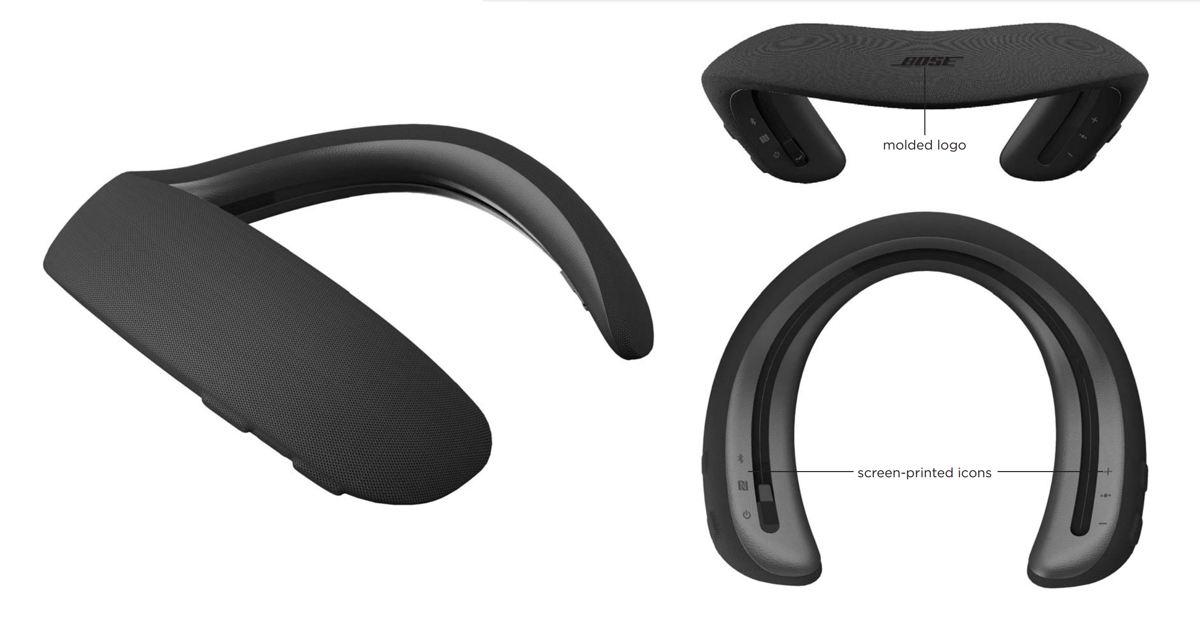
Raised buttons could be felt and pressed through the thin upper cover, and the indicator LEDs could be read as well.


Our CMF Lead developed a series of cover concepts that were resonance tested. Three covers were launched with the product.


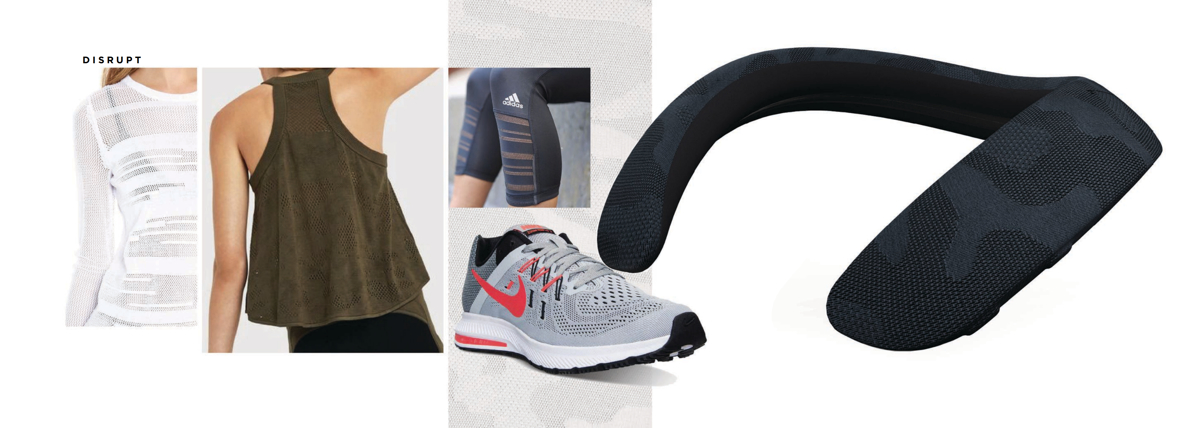

Refinements were made to the core product and covers to improve the donning process, as well as access to the charging port.


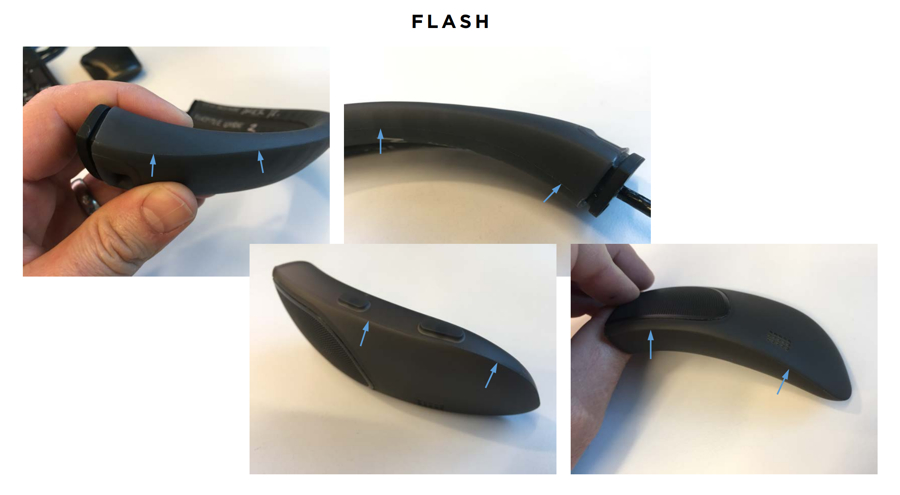
I reviewed part samples as they came in and provided feedback.